Introduction
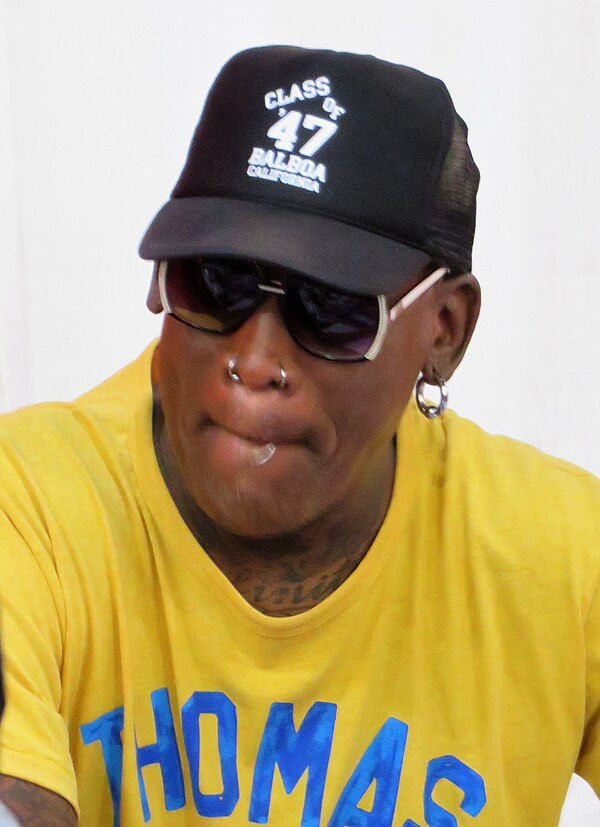
Dennis Rodman is a legendary American professional basketball player best known for his extraordinary achievements in the NBA, particularly his time with the Chicago Bulls and Detroit Pistons. Widely considered one of the greatest defensive players in basketball history, Rodman’s career on the court was marked by his intensity, competitiveness, and unmatched rebounding abilities. Beyond his athletic accomplishments, Rodman has become significant in cultural history for his openness about his bisexuality and his flamboyant personal style, which challenged conventional norms in professional sports during a more conservative era.
Rodman’s visibility as a bisexual athlete was groundbreaking at the time of his coming out, particularly in professional sports where LGBTQ+ visibility was virtually nonexistent. His willingness to be open about his sexuality and to express his identity through his appearance and personal choices contributed meaningfully to broader cultural conversations about acceptance and diversity in athletics.
Dennis Rodman’s Public Statements About Their Sexuality
Dennis Rodman publicly discussed his bisexuality in interviews and in his autobiographical work. In his 1996 autobiography “Bad as I Wanna Be,” Rodman discussed his attraction to both men and women and his personal experiences. The athlete has been relatively candid in interviews about his sexuality and has discussed his perspective on identity and acceptance. Rodman explained that he was attracted to people regardless of gender and that this aspect of his identity has always been part of who he is.
In interviews throughout his career and in subsequent years, Rodman has spoken about his sexuality without shame or apology. He has discussed how his openness about being bisexual was part of his broader approach to living authentically and not conforming to conventional expectations. Rodman has emphasized that people should be free to be themselves and that society’s rigid expectations around identity are limiting.
Rodman has also discussed the significance of being an openly LGBTQ+ athlete during the 1990s, a time when such openness in professional sports was exceptionally rare. He has reflected on the courage this required and has discussed how his visibility may have impacted broader attitudes in sports and society.
Rumors and Public Speculation
Before Dennis Rodman’s public discussion of his bisexuality, there was considerable speculation about his sexuality from various sources, primarily driven by his flamboyant personal style, his fashion choices, and his unconventional appearance. His dyed hair, piercings, and distinctive clothing choices made him a target for commentary and speculation. However, Rodman did not hide behind these rumors or deny aspects of his identity; instead, he addressed them directly and authentically.
Rodman’s decision to be open about his bisexuality represented a deliberate choice to take control of his own narrative and to be honest about who he is, rather than allowing speculation and rumors to define his story. His approach set an example for others about the power of self-determination and authenticity.
Personal Life and Relationships
Dennis Rodman has been married multiple times and has had various relationships throughout his life, including relationships with women and men. He has been relatively open about his romantic life in interviews, though he has also maintained boundaries around what he considers appropriate to discuss publicly. Rodman has spoken about the importance of love and connection in his life.
In interviews, Rodman has discussed his experiences navigating relationships as a bisexual man and a public figure. He has reflected on how being open about his sexuality has affected his personal relationships and his life more broadly. Rodman has also spoken about his family and his experiences as a father, discussing how these relationships have been important to him.
Beyond his romantic relationships, Rodman has maintained a significant public presence through various business ventures, appearances, and media projects. He has remained visible in popular culture and has continued to be a topic of interest and discussion throughout his post-basketball career.
Conclusion
Dennis Rodman’s openness about his bisexuality was groundbreaking for professional sports and for public visibility of LGBTQ+ athletes. At a time when such openness was virtually unheard of in professional athletics, Rodman’s willingness to be public about his sexuality demonstrated remarkable courage. His visibility has contributed meaningfully to the slow but steady evolution of attitudes toward LGBTQ+ individuals in sports and in broader society.
Rodman’s legacy extends beyond his incredible achievements as a basketball player. His willingness to challenge conventions and to live authentically, combined with his status as a world-renowned athlete, made him a significant cultural figure in discussions about identity, acceptance, and freedom of expression. His journey serves as a testament to the importance of visibility and the positive impact that prominent figures can have when they live openly and authentically.
Sources
- Dennis Rodman autobiography “Bad as I Wanna Be” and subsequent interviews
- Sports media coverage of Rodman’s career and personal life
- LGBTQ+ visibility in sports historical coverage and analysis